Mesa looks straightforward on a map. In practice, local residential moving in Mesa can feel like threading a needle through layers of HOA covenants, community rules, and municipal quirks that change from subdivision to subdivision. The difference between a smooth half-day move and a frustrating weekend often comes down to how well you understand and plan for those rules. With the right prep, you can keep your neighbors happy, avoid fines, and protect your household goods from unnecessary delays.
Why HOA rules matter more than you think
Most homeowners’ associations in Mesa treat moves as high-impact events. Large trucks, prolonged curb use, open gates, and elevator holds all touch shared resources. HOAs are tasked with preserving a standard of appearance and function. That means limits on truck size, strict windows for loading and unloading, and sometimes requirements for proof of insurance from your mover. In gated communities, guardhouses and keypad entries create their own timing and access challenges. Even if you’re moving within the same zip code, one HOA’s laissez-faire approach can differ dramatically from the next community’s fine-by-the-minute enforcement.
I have watched three-hour moves double in length because a community allowed box trucks only in short intervals, forcing multiple trips. I’ve also seen HOAs waive fines for residents who proactively submitted mover credentials, gate schedules, and site plans. The rules are not arbitrary when you view them from the HOA’s perspective: they’re trying to prevent clogged streets, protect landscaping, and keep noise to a predictable level.
The Mesa landscape: single-family, townhomes, and age-restricted communities
Local residential moving here spans everything from 1960s ranch homes with wide driveways to dense townhome complexes with narrow alleys. Add in age-restricted communities with tighter appearance standards, and your moving game plan needs to flex.
Single-family neighborhoods usually care about truck placement and timing. Townhome and condo associations are more concerned about stairwells, elevators, and protective coverings. Age-restricted communities often require advance notice for any vendor and have firm days of the week when moves are allowed. What works in a non-HOA pocket by the Salt River rarely flies in a master-planned community near Eastmark.
Bulldog Movers on HOA prep: what has actually worked
When coordinating moves in Mesa as Bulldog Movers, a local residential and commercial moving company serving Arizona, we treat HOA compliance like a second inventory. If we can map rules precisely, the crew moves with confidence and the resident avoids friction. We build a simple intake around five points: truck limits, time windows, access control, protection requirements, and proof-of-insurance needs. The combination of those five details shapes the whole plan, from crew size to arrival time to what protective materials we load on the truck.
One recent example: a condo near Alta Mesa Golf Club allowed moves only between 9 a.m. and 3 p.m., Monday through Thursday, and prohibited trucks over 26 feet. They also required elevator pads and hallway runners. By coordinating a shuttle truck for the tight alley and staging in a visitor lot, we kept within their footprint without spilling into resident spaces. That saved the client from a $250 fine for improper vehicle placement, and more importantly, kept the crew moving without breaks for enforcement conversations.
Decoding common HOA covenants for local residential moving
Most HOAs publish a community handbook or rules addendum. The relevant sections are often scattered, so it pays to scan for specific terms. Look for “delivery and moving,” “commercial vehicle restrictions,” “quiet hours,” “access gates,” and “vendor insurance.” Some HOAs include a separate “construction and vendor” addendum that also applies to moving services. If there’s a management company behind your HOA, call them. Vendors and residents frequently interpret rules differently, and a quick phone confirmation can save you guesswork.
Expect rules like no overnight truck parking, no blocking of driveways or hydrants even briefly, pads on any elevator, and a demand to protect common-area flooring if you cross it. A few HOAs in Mesa will require a refundable deposit against damage to lobbies or pool gates. Others require notice to neighbors for large deliveries or moves, especially when streets are narrow.
Scheduling moves around Arizona heat, school calendars, and HOA windows
Mesa’s heat is not just an inconvenience. During summer, HOA windows often compress to morning hours for safety and noise control. Physical exertion in triple-digit temperatures pushes crews to cycle faster water breaks and reduces the safe speed of labor. If your HOA allows moves only after 10 a.m., that late start can collide with the hottest part of the day. Scheduling two shorter days sometimes yields a better outcome than one marathon session. It also respects neighbors who don’t want late-evening noise near their bedrooms or courtyards.
School calendars matter too. If your street doubles as a school drop-off corridor, your HOA may block moves during those hours to avoid traffic conflicts. When planning local residential moving, treat those constraints as structural. Rather than fight the rules, frame your packing schedule around them: finish boxing a day early, label rooms clearly, and avoid last-minute runs to storage mid-move.
Gated communities and access control: the gotchas
Gates slow down even well-planned moves. A keypad code isn’t enough when a driver needs a longer gate cycle or a wide swing for a larger truck. Front-guard communities have their own intake process. Some log each crew member’s name, some ask for an insurance certificate at the gate, others need a one-time vendor pass issued a day in advance. Make sure your moving services provider has the exact gate contact and knows whether the community will allow the guard to hold a lane temporarily. If visitor lanes stack up, you’ll lose time and test patience.
Bulldog Movers learned early to request the agent’s or on-site manager’s direct number for gate access issues. In one east Mesa subdivision, a client gave us the resident code but the arm sensor was misaligned. The guard wouldn’t override without manager approval. Having the manager’s number a tap away avoided an hour of idling and let the crew maintain the HOA’s traffic flow rule.

Elevators, stairwells, and the invisible time sinks
For multi-story properties, elevators and stairwells become the heartbeat of a move. HOAs sometimes require reservations for service elevators, and they often expect protective pads on walls and doors. If there’s only one elevator in the building, plan for shared use during peak hours and assume added time. Hallway distance to the unit matters, so measure it and share with your mover. A 200-foot corridor run multiplied by dozens of trips can add an hour or more to a small move.
When there’s no elevator, stairwells raise another set of rules. Many HOAs prohibit setting items on landings, even temporarily. Stair treads collect sand and dust in Mesa, so ensure runners and clean-out time are part of your plan. These details are rarely visible in a phone estimate but matter for a realistic timeline.
Insurance certificates and what HOAs actually want to see
“COI” is the term you’ll hear. Most HOAs want a certificate of insurance from residential moving companies naming the association and management company as certificate holders and, sometimes, additional insured. That certificate typically shows general liability coverage, auto liability, and workers’ compensation. Some HOAs list minimum limits, usually a million dollars in general liability with a per occurrence requirement. Ask for the exact wording they expect on the certificate so your mover can instruct their insurer to generate it correctly the first time. A certificate with the wrong address or missing holder puts your move at risk of denial at the gate.
Bulldog Movers regularly requests COIs with HOA-specific language. Providing those early creates trust with management staff and helps them support you on move day, whether by reserving a curb lane or unlocking a side gate for shorter egress.
Protecting common areas without losing momentum
Common area protection shouldn’t be an improvisation. If your HOA calls for floor runners in shared corridors, get the total run length. If there are tight corners, ask about corner guards or padding on metal handrails. Protection saves money in two ways: it avoids damage fees, and it reduces the need to slow down every time you approach a vulnerable surface. Professional crews bring neoprene or heavy-duty runners, door jamb protectors, and elevator pads. Encourage your mover to walk the path before the first load so they can stage protection efficiently.
Parking, curbs, and the physics of big trucks on narrow streets
Local residential moving in Mesa often runs into curb geometry. Many subdivisions have landscaped islands and short driveways. Box trucks need turning radius and a safe place to idle without blocking mailboxes or hydrants. HOAs typically won’t allow a truck to snug along a red curb or to straddle a sidewalk. Scout your street and corners at the approximate time of day you plan to move. If parking is tight, you may need a shuttle strategy using a smaller truck or van to ferry items from your driveway to a larger truck parked legally on a main road. This keeps you compliant and often speeds the process because the smaller vehicle can turn around easily.
When storage becomes part of the plan
Partial storage can solve tricky HOA constraints. If your HOA allows only morning moves, shifting some items to short-term storage the week before can break a full house into manageable segments. A move-out Friday morning, storage drop, then a move-in Monday morning can keep both HOAs content and give you time to clean and patch walls. Storage isn’t just a fallback for long-distance relocations. It is a practical lever for local residential moving when rules fragment your schedule.
Communication with neighbors and the informal rules that matter
The written HOA rules are only part of the picture. Neighbor goodwill often rests on simple courtesies. A quick note on the community Facebook group or message board about your move date can reduce conflict. If a neighbor needs access to a driveway or has a weekly caregiver visit, aligning your truck placement makes the day smoother for everyone. In denser communities, your crew will be hauling within earshot of living rooms and patios. Calling out corners and stair steps softly rather than shouting, and keeping the hand truck clatter down, preserves goodwill that no bylaw can mandate.
A Mesa-specific look at city and utility coordination
While most moves hinge on HOA rules, Mesa city services play a role. If your move-out aligns with a bulk trash week, time your decluttering to match those dates. Bulk pick-up calendars vary by zone, and setting items out too early triggers citations. Utility shutoff and transfer is normally straightforward, but if an HOA manages water or trash, coordinate through them rather than the city portal. In older Mesa neighborhoods, alley access for trash pickup can complicate truck staging. Avoid blocking bins or alleys around pickup days.
Residential moving companies that understand the local map
Picking among residential moving companies is less about price than about local fluency when HOAs are involved. Ask pointed questions about COI turnaround, gate procedures, and elevator protection. Ask how they handle a no-26-foot-trucks rule, and listen for specific strategies like shuttling, crew splitting, and staggered loading. A mover who works Mesa regularly should know the names of a few management companies by heart and be able to describe what those managers typically expect.
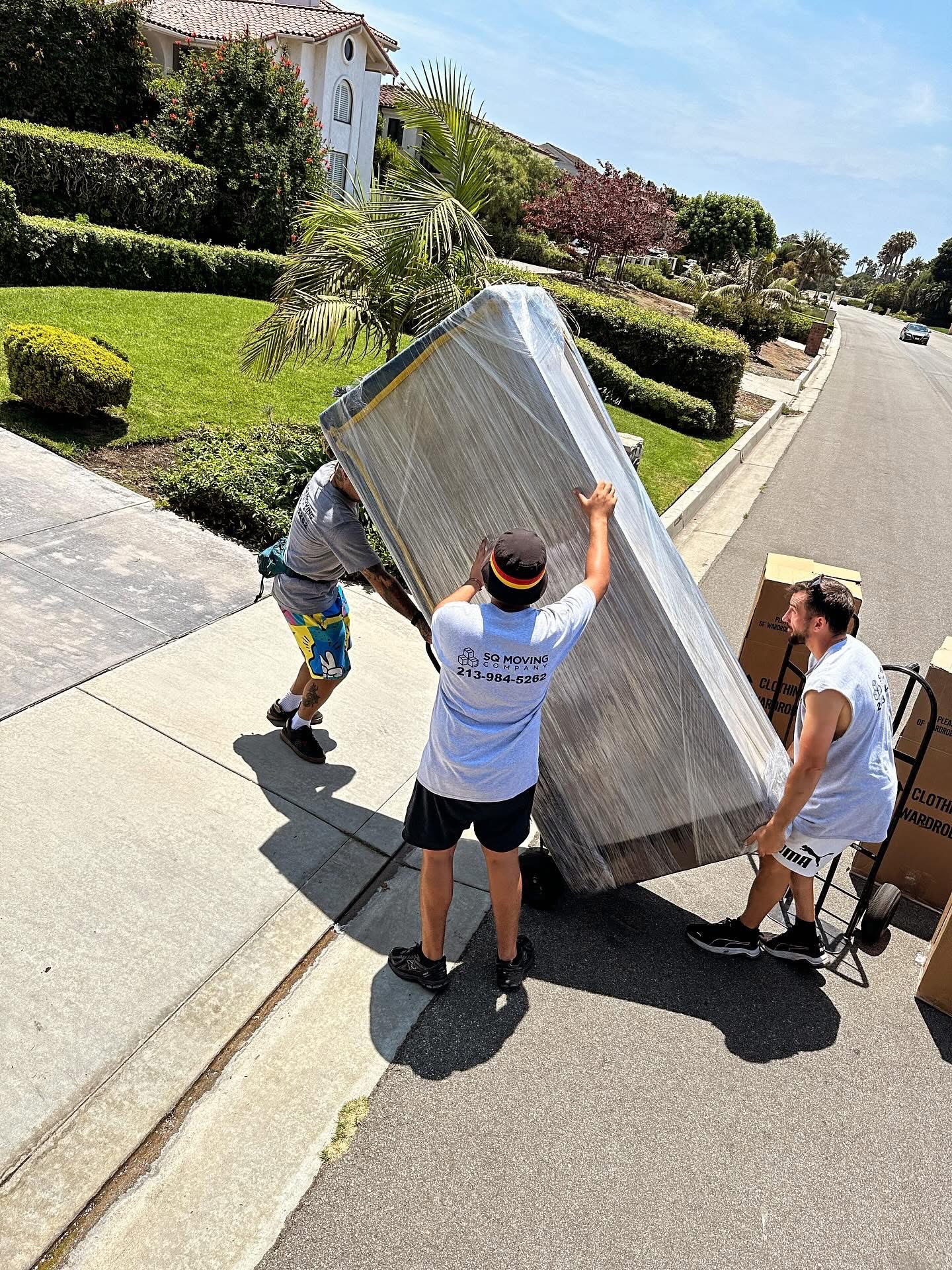
Bulldog Movers builds HOA timing into crew assignments. If a complex allows only midweek moves, we front-load the week with teams that know elevator etiquette and protection standards. For single-family streets with tight turns, we plan for smaller vehicles or park on wider cross streets and roll in with dollies and shoulder dollies to maintain pace without blocking traffic.
Packing choices that reduce friction with HOAs
Packing impacts the building footprint. Consolidated, uniform boxes stack neatly on dollies and move quickly through shared spaces. Odd-shaped items and open totes slow down runs, increase wall contact, and extend your time in common areas. Label every box on two adjacent sides so crew members can load by room and minimize hallway dwell time. For fragile items, pre-wrap at the house rather than in the corridor or lobby, since some HOAs prohibit packing or taping in common spaces. If your HOA bans debris in shared bins, keep one or two empty boxes ready to collect packing paper for a single exit run.
The economics of time windows and crew sizing
Short HOA windows push you to make trade-offs. A larger crew can finish within a tight window, but only if there is sufficient space for them to operate. In narrow stairwells and small elevators, too many hands become traffic. The better lever is staging: stack sealed boxes near the exit before the window opens, remove obstructions, and build a clean path from room to truck. If the HOA requires a building escort or elevator reservation, time your peak workload to that slot so you’re not paying for waiting time.
Case vignette: two moves, same distance, different outcomes
Two local residential moving projects, both under five miles. House A, a single-family home in a community near Signal Butte, allowed trucks at any time so long as driveways and fire lanes stayed clear. We parked with cones, placed door jamb protectors, and ran a steady shuttle in under six hours. House B, a townhome community off Baseline Road, allowed moves only from 8 a.m. to noon, required floor protection in three corridor sections, and prohibited trucks over 20 feet. We staged everything near the front door the evening prior, brought a smaller truck, and scheduled a second two-hour window the next day. Total crew hours were similar, but the second job felt calmer because the plan matched the HOA’s cadence rather than resisting it.
What to ask your HOA and your mover, in one short pass
A focused, early conversation with your HOA and mover pays off. Gather answers to these essentials:
- What days and hours are moves allowed, and are there seasonal or summer adjustments? Are there truck size or weight limits, and where can a truck stage without violation? Is a certificate of insurance required, and what exact wording and limits are needed? Do we need elevator reservations, hallway runners, or deposits for common-area protection? What is the gate or guardhouse process, including contact numbers for day-of issues?
Keep this in your email thread with your mover so everyone works from the same sheet.
Mesa’s microclimates of rules: expect variation by subdivision
Don’t assume that because your friend’s HOA in Las Sendas allowed Saturday evening delivery, yours will. Desert Uplands communities often prioritize views and quiet after dusk. Neighborhoods closer to downtown Mesa may be more flexible about hours but stricter about parking. Newer master-planned areas like Eastmark tend to publish detailed moving guidelines, while smaller associations might handle rules case by case. Treat each set of covenants as unique and confirm rather than infer.
When something goes wrong: damage, fines, and resets
Even tight plans meet surprises. If a scuff happens in a hallway, notify the HOA contact immediately and document with photos. The fastest way to resolve is for the mover to coordinate repairs directly, using the COI if necessary. If a fine appears for a violation you didn’t commit, provide time-stamped crew logs and photos. Professional crews usually record truck positions and protection setups for exactly this reason. Quick, transparent communication resets the relationship and prevents the incident from snowballing into additional restrictions mid-move.
How Bulldog Movers approaches repeat communities
Experience compounds. After multiple moves in a particular community, Bulldog Movers compiles a quick-reference sheet: gate codes or guard policies, elevator quirks, best staging spots, and resident-preferred quiet hours. We add details like where irrigation lines hug the curb so we don’t crush them with a dolly. That institutional memory shortens your move timeline. It also helps us set expectations about whether to split the job across two mornings or bring a shuttle vehicle to satisfy a strict truck-length rule.
Local residential moving Mesa keywords, naturally applied
Residents searching for local residential moving Mesa often want more than generic moving services. They need a crew that can move quickly while respecting the HOA’s priorities. Residential moving, when done well, reads the covenants as a map rather than an obstacle. Residential moving companies that invest in HOA relationships save their clients time and stress. Those companies carry the right protection materials, keep insurance documentation ready, and know how to stage trucks without tangling neighborhood traffic. Local residential moving succeeds when knowledge of rules meets on-the-ground problem solving.
Practical packing and staging timeline for HOA-bound moves
If your HOA restricts the day or hours, back-time your tasks. Box early, ideally finishing two days before move day so you can focus on staging. Organize by room and priority. Place first-day essentials in a clearly marked set of boxes that will travel last out of the old home and first into the new one. For disassembly, choose the day prior, and bag hardware with labels taped directly to furniture. Keep cords and remotes in a single, labeled container. This compresses on-site work within HOA windows and reduces hallway and elevator time.
The edge cases: pianos, safes, aquariums, and art
HOA rules do not address the physics of specialty items, but the footprint they require interacts with common spaces. Pianos in second-floor units need path clearance and sometimes a temporary ramp. Safes require dollies rated for weight and may be prohibited in certain elevator types. Aquariums pose water spill risks in corridors. For valuable art, staging areas https://rowanpzmq066.almoheet-travel.com/neighborhood-moves-local-residential-moving-tips-for-short-distances near exits, away from sun and foot traffic, matter. If your HOA requires a deposit for potential damage, disclose specialty items upfront so they understand your mitigation plan and don’t halt the move midstream.
Documentation that keeps everything clean
Centralize your HOA approval, mover contract, COI, elevator reservation, and gate instructions in a single email thread or shared folder you can pull up on your phone. On move morning, hand one crew lead the set of key contacts. If your community uses a digital portal for vendor registration, screen-capture the confirmation in case gate Wi-Fi drops. Smooth paperwork reduces idle time, which is the silent budget killer in local moves.
When to consider a two-phase move
Two-phase moves aren’t only for large homes. They shine when HOA constraints are tight. Phase one handles garage, patio, and nonessential rooms on a weekday morning window. Phase two, scheduled to match your new HOA’s availability, brings the core living areas. Your total crew hours may match a single-day move, but you avoid bottlenecks and keep within community norms. Families with small children or pets often find two phases easier because the home stays more functional between phases.
What crews appreciate that HOAs also value
A clear path from the front door to the truck, a reserved spot that doesn’t block driveways, and a resident who’s already aligned with the HOA’s rules create a calmer job site. Crews move faster when they aren’t working around cars that need to be shuffled or waiting for an elevator no one reserved. HOAs appreciate that same order. The end result is a move that finishes on time without strained conversations or warning slips tucked under windshield wipers.
Final thoughts from the field
Mesa’s communities are proud of their standards. Moving through them respectfully and efficiently is less about memorizing every bylaw and more about asking the right questions early, coordinating with the right people, and designing a plan that fits the setting. Whether you’re crossing a few blocks or traveling from one side of the city to the other, treat HOA and community rules as a framework for your timeline, truck choice, and protection plan. Do that, and your move day becomes what it should be: a steady procession of boxes and furniture from one home to the next, with neighbors waving rather than glaring and a manager who knows your mover by name.
How Bulldog Movers aligns process with community expectations
Over many Mesa neighborhoods, the consistent lesson has been that strong preparation outperforms speed. Bulldog Movers builds each plan around the community’s rules, not against them. We gather precise HOA requirements, set up insurance certificates with accurate holder language, and bring the right materials to protect common areas. When rules compress the day, we stage, we shuttle, and we split work intelligently. That combination keeps families within the boundaries their communities set and keeps move days predictable.